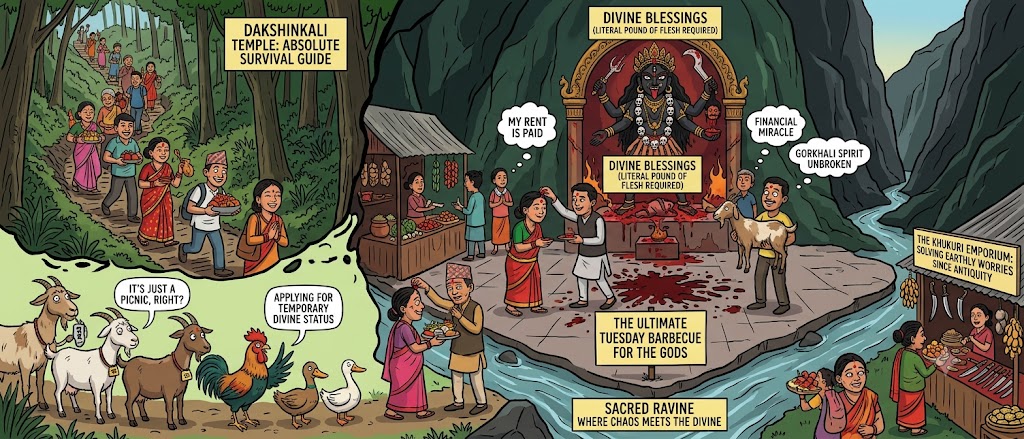
Are you feeling overwhelmed by the mild stresses of modern existence? Then take a short, winding, vomit-inducing bus ride south of Kathmandu to Dakshinkali Temple. Here, the fierce Goddess Kali doesn't care about your positive affirmations or your mindfulness apps. She demands blood. Dedicated to the terrifying, dark-skinned manifestation of Shakti, this cultural powerhouse is one of Nepal’s most significant religious landmarks.
It is an absolute must-visit destination, assuming you don't mind watching your Tuesday afternoon picnic double as an ancient ritual execution. Millions flock here annually to appease a deity who essentially holds the cosmic strings to our fragile mortal luck.
The Ultimate Tuesday Morning Barbecue for the Gods
Culture in Nepal isn’t just about looking at pretty woodcarvings; sometimes it’s incredibly metal. Step into the main courtyard on a Tuesday or Saturday, and you are instantly greeted by the sweet, heavy aroma of incense mixed with the very real smell of raw iron. The cultural significance of Dakshinkali centers on animal sacrifice. Roosters and uncastrated male goats are brought here in droves to have their earthly worries permanently solved by a sharp khukuri.
Worshippers believe that pouring this life force directly onto the sacred ground satisfies Kali's wrath and brings immense prosperity. It is a striking, unapologetic display of raw Tantric Hinduism, reminding us all that in the grand cosmic bank, blessings are rarely free.
The Sacred Ravine Where Chaos Meets the Divine
The temple itself is beautifully tucked away at the confluence of two dark, forested mountain streams. It is a stunning visual metaphor—serene, towering nature framing a floor stained entirely red with devotion. Culturally, this geographic positioning represents the cleansing of sins and the intersection of the earthly and spiritual realms.
Tourists and devotees navigate a chaotic labyrinth of stalls selling bright vermillion powder, marigold garlands, and the very animals currently sweating over their immediate future. Walking through this intense sensory overload is essential to understanding the Nepalese psyche: a complex mix of absolute fear, deep respect, and the practical ability to step over a puddle of blood to politely ask for a promotion at work.
The Audacity to Find Hope in the House of Death
Yet, amidst the absolute carnage, an undeniable sense of profound hope thrives within these stone walls. People don't bring their hard-earned livestock to Dakshinkali out of cruelty; they bring them because they fiercely believe in tomorrow. They pray for the health of their children, the safety of their homes, and the strength to endure whatever economic disaster rolls out next.
Watching a family smile and apply red tika to each other's foreheads right next to the chopping block is the ultimate testament to the Gorkhali spirit. It shows an incredible resilience—a cultural understanding that life and death walk hand-in-hand, and that as long as we keep showing up for the gods, the gods will keep showing up for us.