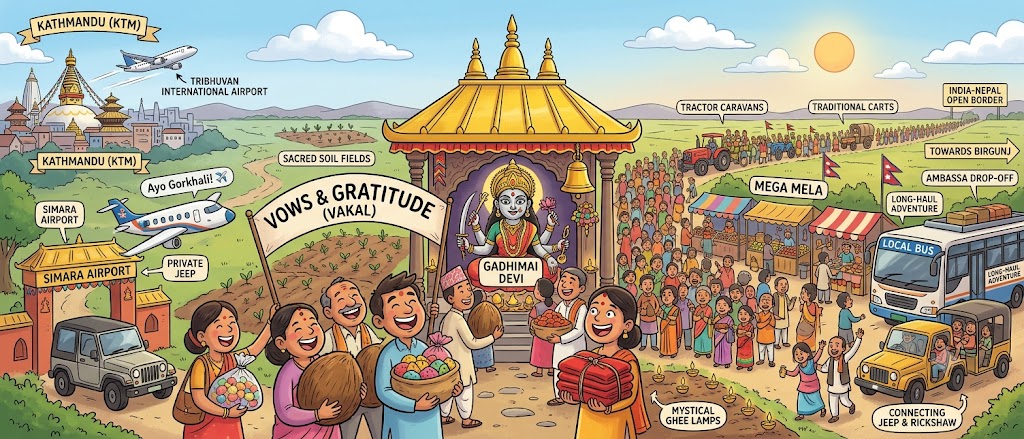
Who is the absolute boss of this sacred ground? It is Gadhimai Devi, a fierce manifestation of Goddess Kali, the Hindu deity of sheer cosmic force, protection, and transformation. The mysterious legend dates back centuries to an ancient ancestor named Bhagwan Chaudhary. As the story goes, while trapped inside the dark walls of a prison, he was visited in a dream by the Goddess herself, who magically broke him out of jail.
He carried a sacred pinch of earth under his turban all the way back to Bariyarpur village, establishing the foundations of the shrine. To this day, the silver-eyed Goddess reigns supreme over the landscape, and local farmers still collect the sacred temple soil, firmly believing that a simple sprinkle over their fields brings unmatched agricultural prosperity and shields their family homes from evil spirits.
The Power of the Sacred Vow
What drives over five million people to pack into tractor caravans, brave the sweltering Terai dust, and march across the open India-Nepal border every five years? It all comes down to the ancient power of the Vakal—a sacred, unbreakable vow made between a devotee and the Goddess. People do not just show up to sightsee; they arrive with heavy hearts, massive dreams, and a desperate need for divine intervention.
Parents arrive praying for the health of a sick child, farmers beg for rain to save their dying crops, and young couples seek blessings to overcome impossible life obstacles. There is a deeply rooted cosmic contract here: when Gadhimai answers your deepest, late-night tearful prayer, you must return to her courtyard during the mega-festival to say thank you.
A Shift in Gratitude and Cosmic Energy
For centuries, the ultimate currency of gratitude was Panchabali—the ritual offering of five animals to transfer vital life energy and balance spiritual debts. Even as the modern era ushers in a highly celebrated push toward a bloodless festival with alternative offerings like coconuts, sweets, and red cloth, the emotional gravity of the space remains completely unchanged.
Devotees firmly believe that the ground itself is alive with cosmic renewal, and standing in that massive, electric crowd provides a profound sense of collective identity, catharsis, and unyielding hope that can conquer any worldly fear. The sheer scale of humanity gathered here creates an energy so palpable that it alters the entire atmosphere of the region.
The Mission: Plotting the Southern Route
How do you march your way down to this epic epicenter of Madhesh Province? You have excellent options to plot your journey depending on your timeline. For the quick, tactical air route, catch a fast domestic flight from Kathmandu down to Simara Airport, then grab a private vehicle straight to Bara District. If you prefer a classic, bumpy Gorkhali road adventure, hop onto a long-haul bus heading toward the bustling border hub of Birgunj, jump off near the highway, and ride a local connecting jeep or rickshaw right into the heart of Bariyarpur village.
Dress modestly to respect the powerful traditions, arrive early to witness the mystical self-lighting ghee lamps, and prepare to expand your mind amid a vibrant, unforgettable display of ancient regional brotherhood that bridges borders, cultures, and generations!