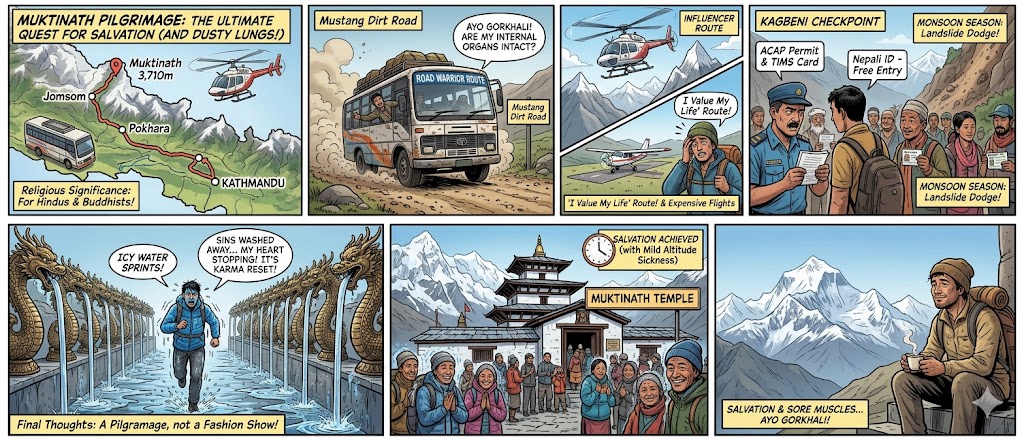
So, you’ve decided to seek salvation at Muktinath Temple. Whether it’s because you’ve finally realized your sins are mounting up or you just want a photo for your "spiritual awakening" highlight reel, Muktinath is the place to be. Perched at 3,710m in the Mustang district, it’s high enough to give you a headache, but low enough that you can still blame your poor fitness level on "mild altitude sickness."
Religious Significance: The Ultimate Wash-Away
Muktinath is one of the most sacred pilgrimage sites for both Hindus and Buddhists. Hindus call it Mukti Kshetra (the Place of Liberation), believing that a dip in the 108 icy waterspouts arranged in a semicircle around the temple will wash away the sins of a lifetime. It’s the ultimate "reset button" for your karma. For Buddhists, the temple is known as Chumig Gyatsa (Hundred Waters), and they believe it is the site of the Dakinis, goddesses of the sky. It is a rare, harmonious spot where two great religions meet, though most pilgrims are too busy shivering to ponder the theology.
The "Joy" of Getting There
Getting to Mustang is an adventure—or, more accurately, a test of your internal organs' ability to withstand extreme vibrations. From Kathmandu, you can choose:
-
The "I Value My Life" Route: Fly to Pokhara, then hop on a flight to Jomsom. From there, it's a jeep ride to Ranipauwa, followed by a 20-minute hike. Easy, breezy, and expensive.
-
The "Road Warrior" Route: A bumpy, soul-crushing jeep ride from Kathmandu through Beni and Kagbeni. The road from Beni to Kagbeni is essentially a glorified gravel slide that nature likes to renovate with landslides every monsoon.
-
The "Influencer" Route: A helicopter charter from Kathmandu. It’s quick, it’s flashy, and it costs more than your first bike, but hey—at least you won’t arrive looking like a dusty mess.
Best Time to Visit
Spring (March–May) and Autumn (September–November) are the gold standards. In spring, you get rhododendrons to distract you from the climb; in autumn, you get clear mountain views that make you feel like the protagonist of a high-budget Nepali movie. Winter is for those who enjoy having their eyebrows frozen, and monsoon season is for those who love playing "dodge the landslide."
The Permit Paperwork
If you’re a Nepali citizen, congratulations—your citizenship or National ID is your ticket. If you’re a foreigner, you get the pleasure of paying for an ACAP permit and a TIMS card. It’s a great way to contribute to the local economy while waiting in lines that make you wonder if the temple is really that hard to get into.
Budget: A Quick Reality Check
For locals, a 3-night/4-day bus package can cost anywhere from Rs 8,000 to Rs 10,000, while a jeep tour will set you back about Rs 12,000 to Rs 15,000. If you're a foreigner, prepare to open your wallet wider; tours range significantly based on your appetite for luxury versus "local authentic" suffering.
Final Thoughts
Once you reach the 108 waterspouts, don't be surprised if the icy water makes you forget your sins entirely—you’ll be too busy trying to keep your heart from jumping out of your chest. It’s spiritual, it’s high-altitude, and it’s definitely a story to tell. Just remember: it’s a pilgrimage, not a fashion show, so leave the heavy heels at home.
त्यसोभए, तपाईंले मुक्तिनाथ मन्दिरमा मोक्ष खोज्ने निर्णय गर्नुभयो। चाहे यो किनभने तपाईंले अन्तमा महसुस गर्नुभएको छ कि तपाईंको पापहरू बढ्दै छन् वा तपाईं केवल आफ्नो "आध्यात्मिक जागृति" हाइलाइट रीलको लागि फोटो चाहानुहुन्छ भने, मुक्तिनाथ हुने ठाउँ हो। मुस्ताङ जिल्लामा ३,७१० मिटरको उचाइमा अवस्थित यो टाउको दुखाइ दिन पर्याप्त छ, तर यति कम छ कि तपाईं अझै पनि आफ्नो खराब फिटनेस स्तरलाई "हल्का उचाइ रोग" को दोष दिन सक्नुहुन्छ।
धार्मिक महत्त्व: अन्तिम धुलाई-टाढा
मुक्तिनाथ हिन्दू र बौद्ध धर्मावलम्बीका लागि पवित्र तीर्थस्थल हो । हिन्दूहरू यसलाई मुक्ति क्षेत्र (मुक्तिको स्थान) भन्छन्, यो विश्वास गर्छन् कि मन्दिरको वरिपरि अर्धवृत्तमा व्यवस्थित १०८ वटा हिउँको पानीको धारामा डुबुल्की मार्दा जीवनभरको पाप पखालिनेछ। यो तपाईंको कर्मको लागि अन्तिम "रिसेट बटन" हो। बौद्ध धर्मावलम्बीहरूका लागि यो मन्दिरलाई चुमिग ग्यात्सा (सय पानी) भनिन्छ र उनीहरू विश्वास गर्छन् कि यो आकाशका देवीहरू डाकिनीहरूको स्थान हो। यो एक दुर्लभ, सामंजस्यपूर्ण स्थान हो जहाँ दुई महान धर्महरू भेट्छन्, यद्यपि अधिकांश तीर्थयात्रीहरू धर्मशास्त्रमा विचार गर्न धेरै व्यस्त छन्।
त्यहाँ पुग्दाको "आनन्द"
मुस्ताङमा पुग्नु एक साहसिक कार्य हो - वा, अधिक सटीक, तपाईंको आन्तरिक अंगहरूको चरम कम्पनको सामना गर्ने क्षमताको परीक्षण। काठमाडौंबाट, तपाईं छनौट गर्न सक्नुहुन्छ:
-
"म मेरो जीवनको मूल्य राख्छु" मार्ग: पोखरा गएर जोमसोम जाने फ्लाइटमा चढ्नुहोस् । त्यहाँबाट, यो रानीपौवाको लागि जीप सवारी हो, त्यसपछि 20 मिनेटको पैदल यात्रा। सजिलो, हावा र महंगो।
-
"सडक योद्धा" मार्ग: काठमाडौंबाट बेनी, कागबेनी हुँदै जीपको उबडखाबड यात्रा । बेनीदेखि कागबेनीसम्मको सडक अनिवार्य रूपमा एक गौरवशाली ग्राभेल स्लाइड हो जुन प्रकृतिले हरेक वर्षायाममा पहिरोको साथ नवीकरण गर्न मन पराउँछ।
-
"प्रभावकारी" मार्ग: काठमाडौंबाट हेलिकोप्टर चार्टर । यो छिटो छ, यो चम्किलो छ, र यो तपाईंको पहिलो बाइक भन्दा बढी खर्च हुन्छ, तर हे-कम्तिमा तपाईं धुलो गडबड जस्तो देखिन आउनुहुन्न।
घुम्न जाने उत्तम समय
वसन्त (मार्च-मे) र शरद ऋतु (सेप्टेम्बर-नोभेम्बर) सुनको मानकहरू हुन्। वसन्त ऋतुमा, तपाईं आरोहणबाट विचलित गर्न गुराँस पाउनुहुन्छ; शरद ऋतुमा तपाईंले स्पष्ट हिमाली दृश्यहरू पाउनुहुन्छ, जसले तपाईंलाई उच्च बजेटको नेपाली चलचित्रको नायक जस्तो महसुस गराउँछ। जाडो ती व्यक्तिहरूका लागि हो जसले आफ्नो आँखीभौं जमाएर आनन्द लिन्छन्, र मनसुनको मौसम "डज द ल्यान्डस्लाइड" खेल्न मन पराउनेहरूका लागि हो।
अनुमतिको कागजी कार्य
यदि तपाईं नेपाली नागरिक हुनुहुन्छ भने, बधाई छ- तपाईंको नागरिकता वा राष्ट्रिय परिचयपत्र तपाईंको टिकट हो। यदि तपाईं विदेशी हुनुहुन्छ भने, तपाईंले ACAP अनुमति र TIMS कार्डको लागि भुक्तान गर्ने आनन्द पाउनुहुन्छ। यो स्थानीय अर्थव्यवस्थामा योगदान पुर् याउने एक उत्तम तरिका हो जब लाइनहरूमा पर्खिरहेको छ जुन तपाईंलाई आश्चर्य लाग्छ कि मन्दिरमा प्रवेश गर्न साँच्चै गाह्रो छ कि छैन।
बजेट: एक द्रुत वास्तविकता जाँच
स्थानीयका लागि ३ रात/४ दिनको बस प्याकेजमा ८ हजारदेखि १० हजार रुपैयाँसम्म र जिप टुरको लागि १२ हजारदेखि १५ हजार रुपैयाँसम्म खर्च हुनेछ । यदि तपाईं विदेशी हुनुहुन्छ भने, तपाईंको वालेट फराकिलो खोल्न तयार हुनुहोस्; भ्रमणहरू लक्जरी बनाम "स्थानीय प्रामाणिक" पीडाको लागि तपाईंको भोकमा आधारित छन्।
अन्तिम विचारहरू
एकचोटि तपाईं 108 वाटरस्पाउट्समा पुग्नुहुन्छ, यदि बरफको पानीले तपाईंलाई आफ्नो पापहरू पूर्ण रूपमा बिर्सछ भने अचम्म नमान्नुहोस् - तपाईं आफ्नो हृदयलाई आफ्नो छातीबाट बाहिर उफ्रिनबाट रोक्ने प्रयासमा व्यस्त हुनुहुनेछ। यो आध्यात्मिक छ, यो उच्च-उचाई हो, र यो निश्चित रूपमा भन्नको लागि एक कथा हो। केवल सम्झनुहोस्: यो एक तीर्थयात्रा हो, फेसन शो होइन, त्यसैले भारी हिलहरू घरमा छोड्नुहोस्।