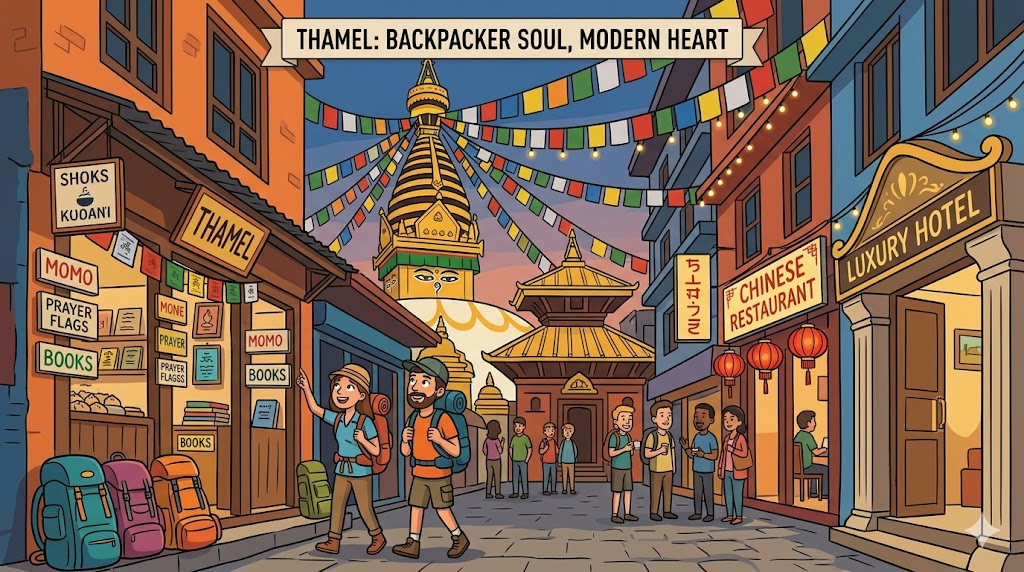
Thamel in 2026 is a paradox wrapped in prayer flags and LED lights. It is the only place on earth where you can buy a hand-knitted yak wool sweater, a high-end North Face jacket, and a plate of spicy Sichuan tofu within a ten-meter radius. While the quiet charm of the 90s is long gone, replaced by the hum of air conditioners from luxury boutique hotels, Thamel remains the undisputed beating heart of Nepal’s tourism. It’s loud, it’s expensive, and it’s unapologetically chaotic.
The Gentrification of the "Gully"
The backpacker vibe is under siege, but it refuses to surrender. Today, Thamel is a land of contrasts. On one side, you have $200-a-night hotels and sleek fine-dining spots catering to the new wave of high-spending travelers. On the other, the original backpacker soul survives in the "secret" rooftop cafes and the basement pubs where a beer still comes with a side of local rock music.
Yes, it’s gotten expensive. The "dollar-a-day" dream is dead; you’re more likely to spend $10 on a cocktail than find a room for that price. Yet, the backpacker vibe persists because Thamel is a rite of passage. No matter how many luxury cars squeeze through the vehicle-free zones, the scent of incense mixed with exhaust and the labyrinthine mystery of its alleys keep the "explorer" spirit alive. You don't come to Thamel for luxury; you come to get lost.
The Ugly: Dealing with the Shadows
But let’s be real—Thamel has a dark side that’s getting harder to ignore. As the sun sets, the "vibey" streets often turn into a gauntlet of whispers. "Namaste, weed? Smoke? Girls?" has become a weary soundtrack for anyone walking alone after 10 PM. The drug trade and organized prostitution aren't just "underground" anymore; they are looming in the doorways of the very streets families walk during the day.
To fix this, we need to stop treating Thamel like a lawless playground. We need Integrated Surveillance and Social Reform, not just occasional police raids.
-
The "Shadow" Patrol: Tourism Police need to be undercover and active. If a "broker" approaches a tourist, there should be immediate legal consequences—not a slap on the wrist.
-
Regulated Nightlife Zones: Shady deals thrive in the dark. Better street lighting and mandatory CCTV for every business "gully" would strip away the anonymity that dealers crave.
-
Social Safety Nets: Many people involved in the "shady" side are victims of circumstance. The city needs to work with NGOs to provide exit ramps for those trapped in the sex trade, while hitting the kingpins with heavy hands.
Beyond the Pashmina and the Pub
Thamel is at risk of becoming a "tourist trap" caricature of itself. If every shop sells the same singing bowl and every bar plays the same three Oasis songs, the soul will eventually evaporate. We need a Thamel Renaissance:
-
Literary & Art Corners: Why aren't there more poetry cafes or live thangka painting workshops where tourists can actually participate?
-
The Heritage Trail: Thamel is home to ancient bahals (courtyards) that are currently being used as parking lots or trash dumps. These should be restored into quiet heritage zones for tea and meditation, away from the techno beat.
-
Pop-up Local Markets: Instead of just imported goods, give space to local startup entrepreneurs selling "Made in Nepal" tech, fashion, and organic products.
The Bottom Line: Thamel will always be the gateway to the Himalayas, but we can't let it become a gated community for the rich or a gutter for the lawless. It needs to remain the world’s living room—messy, vibrant, and safe for everyone. We need to preserve the grit, but wash away the grime.