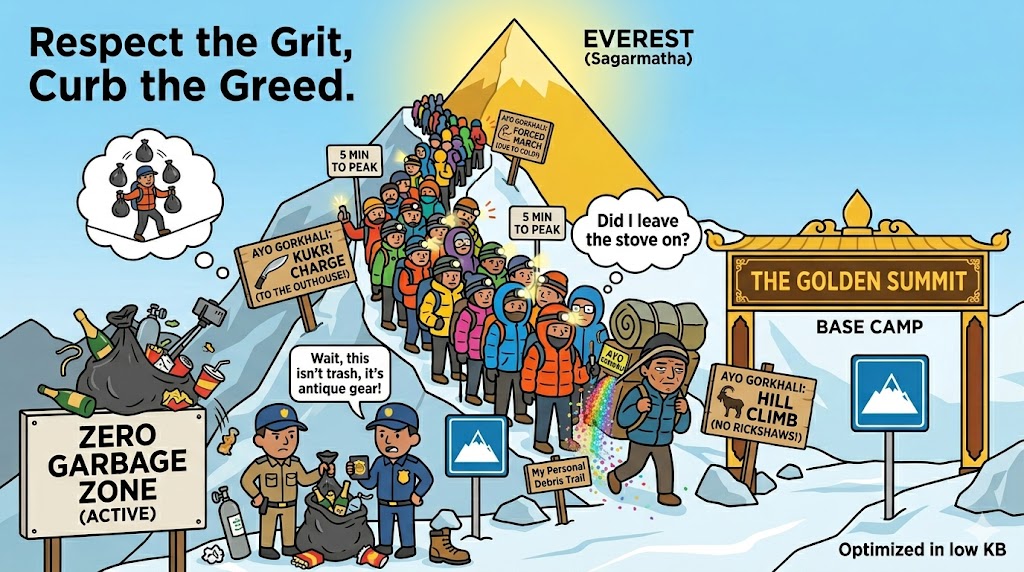
Everest in 2026 is no longer just a mountain; it is a sprawling, high-altitude metropolis. Every spring, a city of heated geodesic domes and pop-up espresso bars blossoms at 5,300 meters. While the world watches in awe, Sagarmatha is breaking records for all the wrong reasons: staggering permit numbers and a human footprint that is becoming impossible to ignore. We must stop romanticizing the peak as a "wilderness." It is a high-stakes economy, currently vibrating with an energy that feels more like a frantic trading floor than a spiritual sanctuary.
The Golden Vibe: The Resilience of the Grit
The true "vibe" of the mountain is still found in its silence—the indestructible Ayo Gorkhali spirit that keeps the machinery running. You feel it in the pre-dawn chill, the thin air biting at your lungs, and the rhythmic chant of a Sherpa offering incense at a Lhaso. Despite the commercial circus, the mountain’s gravity remains absolute.
Everest is Nepal’s MVP. It is the financial engine for the entire Solukhumbu region, funding the schools, clinics, and infrastructure that sustain local life. It is a crown jewel of national identity, and the pride of seeing our flag atop the world is a feeling that never fades.
The Bad: The "Death Zone" Traffic Jam
But we have to confront the "tourist trauma" happening at the top. We’ve all seen the viral footage: a glowing serpentine line of headlamps frozen at the Hillary Step, climbers waiting for hours in the thin air for a fleeting five-minute photo.
When you pay $70,000 to be virtually hauled to the summit by a team of Sherpas, you aren't an "explorer"—you are a "consumer" of an extreme experience. This congestion leads to the most visible failure: the pollution. Discarded oxygen cylinders, shredded tents, and human waste are the "debris trail" of a trophy-hunting culture. Polite signage has failed; it is time for strict entry quotas and merit-based permits that prioritize mountaineering skill over the size of a bank account.
The Ugly: Profit Over Purpose
The deepest shadow on the mountain is the transactional nature of modern expeditions. We speak of a "sacred" connection to the peak, yet the relationship is increasingly resembling a landlord and a tenant.
-
The Safety Gap: In the rush for "100% success rates," safety is sometimes traded for speed. Some foreign "brokers" prioritize their profit margins over the welfare of the porters and guides who carry the literal weight of the expedition.
-
The Accountability Deficit: We need more than just "Zero Garbage" signs; we need Zero Tolerance. The Tourism Police should have the authority to pull operational licenses of agencies that cannot account for every oxygen bottle brought onto the mountain. If you bring it up, you bring it down. Period.
Reclaiming the Soul
Nepal needs to stop acting like the waiter and start acting like the owner. Sagarmatha doesn’t need more luxury rave domes or high-altitude food courts; it needs its sacred essence back.
To ensure the mountain’s longevity, we must pivot:
-
Sherpa Storytelling: Invest in training that empowers local guides to be historians and cultural ambassadors, not just pack-mules.
-
Namche Artisanal Hubs: Transform the gateway town into a center for genuine craftsmanship—weaving, carving, and art—where value stays in local hands.
-
Climate Mountaineering: Replace shallow "summit-chasing" with scientific expeditions where trekkers earn their stripes by studying receding glaciers and monitoring high-altitude ecosystems.
The Bottom Line: Everest will always be the pinnacle of human ambition. But we cannot let it become a dumpster for the global elite or a high-risk gamble for our people. Good vibes are a start, but a backbone is what will save the mountain. It’s time to respect the grit and curb the greed.