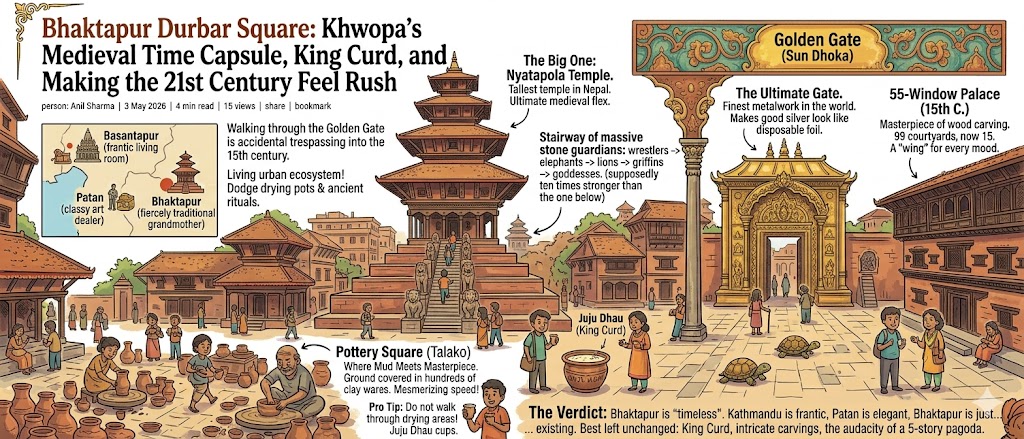
If Kathmandu Durbar Square is the frantic heart of Nepal, where history and the modern world dance in close, crowded proximity, and Patan is the classy art dealer, then Bhaktapur Durbar Square is your fiercely traditional grandmother who refuses to sell the ancestral farmhouse because "it has character" (and probably a ghost or two). Known historically as Khwopa, this entire city is so impeccably preserved that walking through the Golden Gate feels less like sightseeing and more like accidental trespassing into the 15th century. It’s not just a "museum"; it’s a living urban ecosystem where you have to dodge both drying clay pots and people performing 500-year-old rituals while on their mobile phones.
The Big One: Nyatapola Temple
First up is the Nyatapola Temple in Taumadhi Square. Standing at five stories, it is the tallest temple in Nepal. Built by King Bhupatindra Malla in 1702—apparently because he wanted to prove that Malla kings had bigger pagoda ambitions than anyone else—this structure is the ultimate medieval flex.
The Details: The stairway is lined with pairs of massive stone guardians, each supposedly ten times stronger than the one below. We start with wrestlers, then progress to elephants, lions, griffins, and finally, goddesses. If you make it to the top without getting intimidated by a stone griffin, you win bragging rights.
The Vibe: Nyatapola is remarkably earthquake-resistant, having survived both the 1934 and 2015 disasters. It stands tall, looking down at modern concrete buildings with an expression that says, "Amateurs."
The Palace of 55 Windows and the Ultimate Gate
You can’t miss the 55-Window Palace. Built in the 15th century, its masterpiece is the incredible wood carving. Every single window is unique. It once housed 99 courtyards, but earthquakes have reduced that number to a mere 15. The Malla kings clearly believed in having a "wing" for every mood.
Right next to it is the Golden Gate (Sun Dhoka), the entrance to the Taleju Temple complex. It is widely considered the finest piece of repoussé metalwork in the entire world. It’s so intricate and shiny that it makes your grandmother’s "good silver" look like disposable aluminum foil. You are not allowed inside the main temple unless you are a high priest or the ghost of a Malla king, but the gate itself is worth the trip.
Pottery Square: Where Mud Meets Masterpiece
A five-minute walk south brings you to Pottery Square. If the Durbar Square is the elegant living room, this is the dusty, hardworking workshop. This is not a tourist trap; it is a genuine working market. The ground is covered in hundreds of clay wares drying in the sun.
Pro Tip: If you visit on a sunny day, you’ll see local potters turning wheels with mesmerizing speed, transforming grey lumps into water pots and yogurt bowls (Juju Dhau cups). Do not walk through the drying areas, unless you want to feel the wrath of a potter whose week’s work you just crushed.
The Verdict
Bhaktapur is "timeless." While Kathmandu is busy being the frantic capital, and Patan is being elegant, Bhaktapur is just… existing. It’s quieter, more intimate, and reminds us that some things—like king curd, intricate wood carvings, and the sheer audacity of building a five-story pagoda—are best left unchanged.