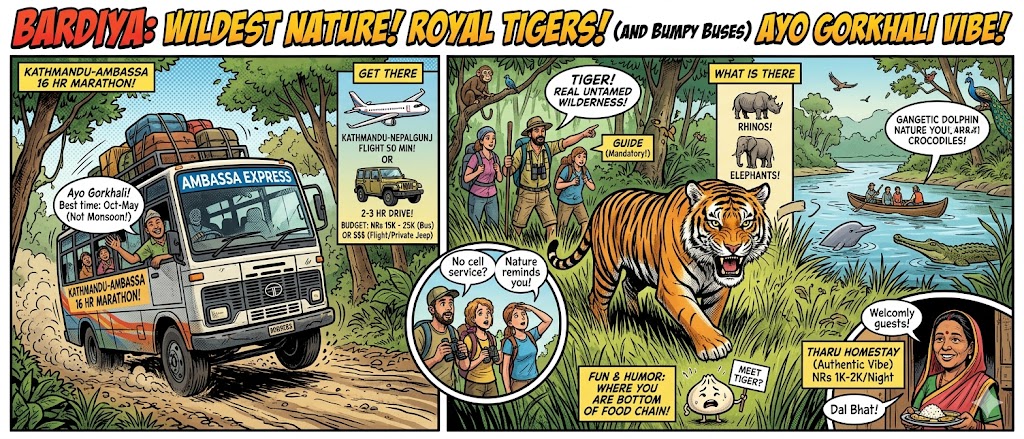
If you think Nepal is only about freezing your toes off on snowy mountain peaks, Bardiya National Park is here to aggressively slap some tropical humidity into your lifestyle. Situated in the far-western plains of the Terai, Bardiya is the largest undisturbed wilderness in the country.
This isn’t a commercialized petting zoo like Chitwan where you’ll bump into ten tourist buses while chasing a single, annoyed rhino. No, sir. Bardiya is the real deal—a dense, untamed playground of massive Sal forests, sweltering grasslands, and rivers.
The undisputed celebrity of Bardiya is the Royal Bengal Tiger. If you’re lucky, you’ll catch a glimpse of this majestic predator staring at you like you’re an oversized, slow-moving momo. Alongside the big cats, you have gigantic wild elephants, greater one-horned rhinoceroses, and if you stare long enough into the Babai or Karnali rivers, you might even spot the rare, critically endangered Gangetic dolphins.
How to Get There: The Endurance Test
You have two distinct paths to reach this wild paradise from Kathmandu:
-
The "Ayo Gorkhali" Budget Bus Marathon: You pack your patience, jump on a direct public or tourist bus from Gongabu Bus Park, and prepare your spinal cord for a grueling 12 to 16-hour journey to Ambassa. The bus will play deafening regional remixes, navigate bumpy roads, and drop you off at Ambassa in the pitch-black hours of the early morning. From there, you catch a local jeep or a motorbike lift to the main tourist hub of Thakurdwara.
-
The "Luxury Elite" Shortcut: You book a 50-minute domestic flight from Kathmandu to Nepalgunj, enjoying panoramic mountain views from the right side of the aircraft. Once you land in the scorching heat of Nepalgunj, you take a 2 to 3-hour private jeep ride directly to your resort. It's fast, it's comfortable, but it bypasses the spiritual awakening that only a long-haul Nepali bus ride can provide.
Best Time to Visit: Beat the Heat or Bake with the Tigers
If your survival instinct is functional, visit during Autumn (October to November) or Late Winter to Spring (February to April). The weather is relatively pleasant, and the jungle isn’t trying to melt your skin off. However, if you are an absolute fanatic obsessed with spotting a tiger, the prime window is March to May.
As the temperatures skyrocket, the waterholes dry up, forcing the tigers out of hiding to grab a drink. It will be hot enough to fry an egg on your forehead, but hey, you get to see a tiger! Avoid the monsoon season unless you want to be carried away by a synchronized army of giant leeches and flooded rivers.
The Budget: Wild and Reasonably Priced
Bardiya caters beautifully to both broke backpackers and high-rolling jungle explorers.
-
The Park Permit: The government charges an entry fee of NPR 100 for Nepalis, NPR 500 for SAARC nationals, and NPR 2,000 for foreigners per day. Remember, it is mandatory to hire a local guide to walk inside the park—because entering a tiger sanctuary without a guide is an excellent way to turn yourself into wildlife feed.
-
Accommodation & Food: Budget guesthouses and cozy Tharu homestays in Thakurdwara cost around NPR 1,000 to 2,000 per night, serves delicious, mountain-sized portions of Dal Bhat, and lets you experience local culture. If you want a luxury safari resort with infinity pools and air conditioning, prices easily shoot past NPR 15,000+ per night.
-
Safari Activities: A full-day open-top jeep safari split among a group costs anywhere from NPR 15,000 to 20,000+ total, while full-day jungle walks or canoe floats can be arranged for a couple thousand rupees.
Why it is Fun: Pure, Unfiltered Jungle Magic
Bardiya is fun because it doesn't try to coddle you. Sitting silently in a wooden machan (watchtower) for hours, listening to the alarm calls of deer echoing through the trees, and waiting for a 200 kg apex predator to step out of the bushes is an adrenaline rush that no city club can ever replicate.
It is a place where you unplug your phones, wash off your corporate stress, and remember how beautiful, raw, and unpredictable the world used to be. Pack your earth-toned clothing, carry your binoculars, and head out west—the wild is waiting, and it's spectacular!
यदि तपाईंलाई लाग्छ कि नेपाल हिउँले ढाकेका पहाडका चुचुराहरूमा खुट्टाका औंलाहरू जम्ने मात्र हो भने, बर्दिया राष्ट्रिय निकुञ्ज तपाईंको जीवनशैलीमा केही उष्ण कटिबन्धीय आर्द्रतालाई आक्रामक रूपमा थप्न यहाँ छ। तराईको सुदूर पश्चिमी मैदानमा अवस्थित बर्दिया देशको सबैभन्दा ठूलो अशान्त मरुभूमि हो।
यो चितवन जस्तो व्यावसायिक पाल्तु चिडियाखाना होइन जहाँ तपाईं एकल, रिसाएको गैंडालाई लखेट्दा दस पर्यटक बसहरूमा ठोक्किनुहुनेछ। होइन, सर, बर्दिया नै वास्तविक कुरा हो—सालको विशाल जंगल, उज्यालो घाँसे मैदान र नदीनालाहरूको घना, अनियन्त्रित खेल मैदान।
बर्दियाको निर्विवाद सेलिब्रेटी रोयल बंगाल टाइगर हो। यदि तपाईं भाग्यशाली हुनुहुन्छ भने, तपाईंले यस राजसी शिकारीको एक झलक पाउनुहुनेछ जुन तपाईंलाई हेर्दै छ जस्तो कि तपाईं एक ओभरसाइज्ड, ढिलो गतिमा चल्ने मोमो हुनुहुन्छ। ठूला बिरालाहरूको साथमा, तपाईंसँग विशाल जंगली हात्तीहरू, ठूला एक-सिङ्गे गैंडा छन्, र यदि तपाईं बबई वा कर्णाली नदीहरूमा लामो समयसम्म हेर्नुभयो भने, तपाईंले दुर्लभ, गम्भीर रूपमा लोपोन्मुख गङ्गा डल्फिनहरू पनि देख्न सक्नुहुन्छ।
त्यहाँ कसरी पुग्ने: धीरज परीक्षण
काठमाडौंबाट यो जङ्गली प्रमोदवनमा पुग्नका लागि दुई बेग्लाबेग्लै बाटो छन् ।
-
"आयो गोर्खाली" बजेट बस म्याराथन: तपाईं आफ्नो धैर्य प्याक गर्नुहुन्छ, गोंगाबु बस पार्कबाट सिधा सार्वजनिक वा पर्यटक बसमा हाम फाल्नुहुन्छ, र तपाईंको मेरुदण्डलाई अम्बासाको लागि 12 देखि 16 घण्टाको कठिन यात्राको लागि तयार पार्नुहोस्। बसले बहिरा क्षेत्रीय रिमिक्सहरू खेल्नेछ, उबडखाबड सडकहरू नेभिगेट गर्नेछ, र तपाईंलाई बिहानको पिच-कालो घण्टामा अम्बासामा छोड्नेछ। त्यहाँबाट, तपाईं स्थानीय जीप वा मोटरसाइकल लिफ्ट समात्नुहुन्छ ठाकुरद्वाराको मुख्य पर्यटकीय केन्द्र।
-
"लक्जरी एलिट" सर्टकट: तपाईं काठमाडौंबाट नेपालगन्जको लागि ५० मिनेटको आन्तरिक उडान बुक गर्नुहुन्छ, विमानको दायाँ छेउबाट मनोरम पहाडी दृश्यहरूको आनन्द लिनुहुन्छ। नेपालगन्जको चर्को गर्मीमा अवतरण गरेपछि, तपाईं २ देखि ३ घण्टाको निजी जीप यात्रा गरेर सिधै आफ्नो रिसोर्टमा पुग्नुहुन्छ । यो छिटो छ, आरामदायी छ, तर यसले आध्यात्मिक जागरणलाई बाइपास गर्दछ जुन केवल लामो दूरीको नेपाली बस यात्राले मात्र प्रदान गर्न सक्दछ ।
भ्रमण गर्न उत्तम समय: गर्मीलाई हराउनुहोस् वा बाघहरूसँग बेक गर्नुहोस्
यदि तपाईंको बाँच्ने प्रवृत्ति कार्यात्मक छ भने, शरद ऋतु (अक्टोबरदेखि नोभेम्बर) वा लेट विन्टर देखि वसन्त (फेब्रुअरीदेखि अप्रिल) को समयमा भ्रमण गर्नुहोस्। मौसम अपेक्षाकृत सुखद छ, र जंगलले तपाईंको छाला पगाल्ने प्रयास गरिरहेको छैन। जे होस्, यदि तपाईं बाघ देख्नको लागि एक पूर्ण कट्टरपन्थी हुनुहुन्छ भने, मुख्य विन्डो मार्चदेखि मे सम्म हो।
तापक्रम बढ्दै जाँदा, वाटरप्वालहरू सुक्छन्, जसले बाघहरूलाई पेय पदार्थ लिन लुक्नबाट बाहिर निकाल्छ। यो तपाईंको निधारमा अण्डा फ्राई गर्न पर्याप्त तातो हुनेछ, तर हे, तपाईंले बाघ देख्न पाउनुहुनेछ! मनसुनको मौसमबाट बच्नुहोस् जबसम्म तपाईं विशाल जोंक र बाढी नदीहरूको सिंक्रोनाइज सेनाद्वारा टाढा जान चाहनुहुन्न।
बजेट: जंगली र उचित मूल्य
बर्दियाले ब्रेक ब्याकप्याकर र उच्च-रोलिंग जंगल अन्वेषकहरू दुवैलाई सुन्दर रूपमा पूरा गर्दछ।
-
पार्क अनुमति: सरकारले नेपालीहरूको लागि 100 रुपैयाँ, सार्क नागरिकहरूको लागि एनपी 500 र विदेशीहरूको लागि प्रति दिन 2,000 रुपैयाँ प्रवेश शुल्क लिन्छ । याद गर्नुहोस्, पार्कभित्र हिंड्नको लागि स्थानीय गाइड भाडामा लिनु अनिवार्य छ - किनकि गाइड बिना बाघ अभयारण्यमा प्रवेश गर्नु आफैंलाई वन्यजन्तु फिडमा परिणत गर्ने उत्कृष्ट तरिका हो।
-
आवास र खाना: ठाकुरद्वारामा बजेट गेस्टहाउसहरू र आरामदायक थारु होमस्टेको लागत प्रति रात लगभग १,००० देखि २,००० रुपैयाँसम्म हुन्छ, दाल भाटको स्वादिष्ट, पहाड आकारको भागहरू सेवा गर्दछ, र तपाईंलाई स्थानीय संस्कृतिको अनुभव गर्न दिन्छ। यदि तपाईं इन्फिनिटी पूल र एयर कंडीशनिंगको साथ लक्जरी सफारी रिसोर्ट चाहानुहुन्छ भने, मूल्यहरू सजिलैसँग प्रति रात १५,००० + भन्दा बढी हुन्छ।
-
सफारी गतिविधिहरू: एक समूहमा विभाजित एक पूर्ण-दिनको ओपन-टप जीप सफारीको लागत INR 15,000 देखि 20,000+ सम्म हुन्छ, जबकि पूर्ण-दिनको जंगल पैदल यात्रा वा क्यानो फ्लोटहरू केही हजार रुपैयाँमा व्यवस्था गर्न सकिन्छ।
किन यो रमाईलो छ: शुद्ध, अनफिल्टर्ड जंगल जादू
बर्दिया रमाईलो छ किनकि यसले तपाईंलाई कुद्न खोज्दैन। घण्टौंसम्म काठको माचन (वाचटावर) मा चुपचाप बस्नु, रूखहरूमा हरिणको अलार्म आवाजहरू सुन्नु र झाडीबाट बाहिर निस्कन २०० किलोग्रामको शीर्ष सिकारीको लागि पर्खनु एक एड्रेनालाईन भीड हो जुन कुनै पनि शहरको क्लबले कहिल्यै नक्कल गर्न सक्दैन।
यो एक ठाउँ हो जहाँ तपाईं आफ्नो फोनहरू अनप्लग गर्नुहुन्छ, तपाईंको कर्पोरेट तनाव धुनुहुन्छ, र सम्झनुहुन्छ कि संसार कति सुन्दर, कच्चा, र अप्रत्याशित थियो। तपाईंको माटो-टोन्ड कपडाहरू प्याक गर्नुहोस्, तपाईंको दूरबीन बोक्नुहोस्, र पश्चिमतिर जानुहोस् - जंगली पर्खिरहेको छ, र यो शानदार छ!