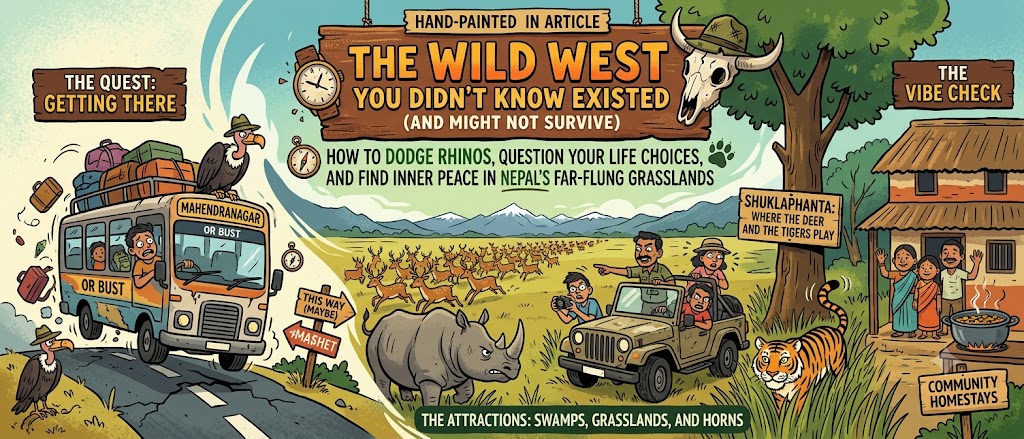
Pack your bags and your existential dread, because getting to Shuklaphanta National Park is a test of human endurance. Located in the absolute far-western corner of Nepal, you can either take a blissful, bank-account-crushing flight to Dhangadhi or opt for a soul-crushing, 15-to-18-hour local bus ride from Kathmandu. The bus offers complimentary spinal realignment via massive potholes and a soundtrack of high-pitched regional remixes at 3:00 AM. Once you arrive in Mahendranagar (now officially Bhimdatta, because changing names fixes infrastructure), you are just a short, bumpy auto-rickshaw ride away from the park. It’s an ordeal so brutal that by the time you arrive, even a charging rhino feels like a welcoming committee.
The Main Attraction: Swamps, Grasslands, and Horns
Welcome to the largest patch of continuous phanta (grassland) in Nepal. It is breathtakingly beautiful, fundamentally wild, and highly efficient at reminding you that you are at the bottom of the food chain. Shuklaphanta is famous for hosting the world's largest herd of swamp deer (barasingha). Watching thousands of them sprint across the open plains at sunset is a magical, almost spiritual experience—until you remember that where there are thousands of deer, there are apex predators watching them. And yes, the park boasts a booming population of Royal Bengal Tigers and greater one-horned rhinos. Keep your eyes peeled and your running shoes tied; it’s an optimistic safari where you hope to see a tiger, and an equally optimistic prayer that it isn't hungry.
The Vibe Check: Tharu Hospitality and Wilderness Survival
When you aren’t actively scanning the brush for things that can outrun you, the local culture is an absolute delight. Staying at a community homestay or a local resort gives you a taste of authentic Tharu hospitality, incredible traditional cuisine, and a chance to sleep in actual peace, far away from city smog. The locals are incredibly warm, optimistic, and deeply connected to this land, which is comforting because they actually know what to do if a wild elephant decides to inspect your cottage. It’s the perfect blend of serene cultural immersion and the subtle, thrilling background hum of impending wildlife encounters.
The Verdict: Why You Must Go (Before Everyone Else Does)
Let’s be honest: Shuklaphanta isn't Chitwan. It doesn't have rows of luxury resorts, crowded souvenir shops, or selfie-stick-wielding tourists blocking your view. It is raw, remote, and brilliantly chaotic. You come here to experience Nepal’s wild west exactly as it was meant to be—untamed and unapologetic. You will get covered in dust, you will question why you traveled this far, and you will absolutely fall in love with the sheer, untouched beauty of the place. So grab your camera, embrace the sarcasm, pack some heavy-duty bug spray, and go explore the wild west. Just remember to respect the wildlife, because out here, the rhinos do not care about your travel blog.