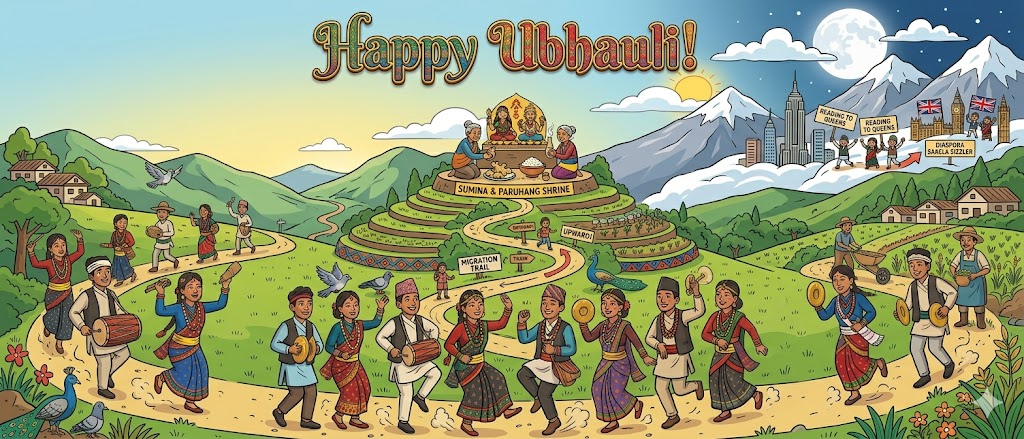
If you thought the only people obsessed with "moving up" were corporate climbers in New York, you clearly haven't met the Kirat community during Ubhauli Parva. Celebrated on the full moon of Baisakh (which is today, so put down that phone and go find a drum), Ubhauli is essentially nature’s way of saying, "It’s getting hot down here, let’s go where the breeze is cool and the crops are ready."
While the rest of the world is worrying about global warming, our Kirat brothers and sisters—the Rai, Limbu, Sunuwar, and Yakkha folks—are busy thanking Mother Nature (Laxmi/Parbati in her local forms) for the rain and the soil. It’s a festival of migration, movement, and the kind of leg workout that makes CrossFit look like a nap.
The Sakela Sizzler: 10,000 Steps? Hold My Chhyang The heart of Ubhauli is the Sakela (or Silli) dance. Now, this isn't your average club-shuffling. This is a rhythmic, synchronized reenactment of... well, life. The dancers mimic everything from the flight of birds to the planting of seeds and even the occasional "how to deal with a pest" move.
It’s performed in a circle to represent the cycle of life, but let’s be honest: it’s also a great way to see who in the village has the best stamina. If you can dance the Sakela for three hours straight under the sun without spilling a drop of your sweat into the communal pot, you’re basically a Gorkhali legend.
The "Chasok Tangnam" Vibe: Food, Faith, and Family You can't have a Kirat festival without the holy trinity: Ginger, Rice, and a very "spirited" beverage. Offerings are made to Sumina and Paruhang (the ancestral deities) to ensure that the upcoming season doesn't bring locusts, floods, or—heaven forbid—a bad harvest.
In the Diaspora, this translates to us gathering in community halls from Reading to Queens, trying to remember the steps we learned from a YouTube tutorial while smelling the glorious aroma of Sargemba (blood sausage) and Wachipa. It’s the one time of year when "unfolding your layers" involves a traditional wrap-around skirt and a lot of beads.
Indian Gorkhas & The Borderless Beat Our cousins in Sikkim and Darjeeling take Ubhauli just as seriously. In fact, if you’re in Gangtok today, the sound of the Dhol and Yamke is probably louder than the traffic. It’s a reminder that no matter which side of the Mechi River you’re on, the spirit of the soil is the same. Just remember, if you’re joining the circle in India, the "Sakela" might have a slightly different flair, but the goal is the same: don't trip over your fellow dancer’s feet.
The Survival Guide for Ubhauli:
-
The Dress Code: If you aren’t wearing enough beads to be heard from three blocks away, are you even celebrating?
-
The Dance: Mimic the birds. If you look like a pigeon trying to find a crumb, you’re doing it right.
-
The Prayer: Pray for the farmers. Because without them, your "organic avocado toast" wouldn't exist.
So, Happy Ubhauli to everyone moving upward and onward! May your harvest be plentiful, your Sakela steps be steady, and may your Chhyang always be cold.