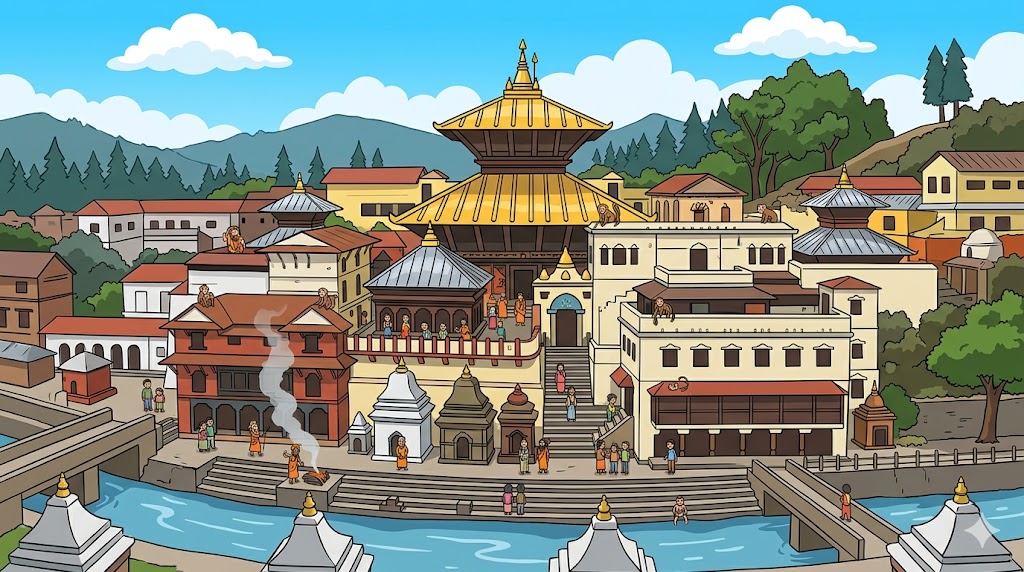
Ayo Gorkhali! The battle cry that once shook the Himalayas must now resonate through the corridors of our administration and the ghats of the Bagmati. Pashupatinath is not merely a temple; it is the beating heart of the Hindu world, the ultimate sanctuary of Lord Shiva. Yet, as we stand upon the Arya Ghat, we are forced to confront a reality that is far from divine. It is time for a radical transformation—a mission to restore the "holiest of the holy" to a state of golden magnificence and administrative excellence.
The Golden Standard: Tapping into Devotion
We look across the border and see the shimmering spires of Tirupati and Kashi Vishwanath. Indian devotees pour hundreds of kilograms of gold and billions in "daan" into their local shrines. Why does the holiest shrine of them all—the seat of Pashupatinath—not command the same level of global investment?
It is not a lack of faith; it is a lack of trust and infrastructure. We must create a transparent, globally accessible "Sovereign Shiva Fund." If we provide a mechanism where a devotee from Maharashtra or London knows their gold will plate the very rafters of the inner sanctum rather than disappear into a bureaucratic void, the gold will flow. We need to invite the 100 million-strong Indian middle class not just to visit, but to invest in the spiritual heritage of their ancestors.
From Sewage to Sacred: The Bagmati Mandate
The current state of the Bagmati is a national heartbreak. For too long, the water flowing past the feet of the Lord has resembled a sewage drain rather than a celestial river.
-
Filtration & Flow: We need high-capacity, industrial-grade water filtration plants upstream.
-
Zero-Waste Policy: The water must be treated, filtered, and kept fresh. A pilgrim should be able to sprinkle the water on their head without fear of infection.
-
The Vision: We must treat the Bagmati as a living entity. If the Ganges can be revitalized, the Bagmati—shorter and more manageable—can certainly be reclaimed.
The 100 Million Tourist Blueprint
To bring 100 million Indian tourists to Kathmandu, we must move beyond "cheap" tourism and focus on "seamless" spiritual experiences.
-
Direct Connectivity: Fast-track religious circuits connecting Kashi, Gaya, and Pashupatinath.
-
Tiered Entry System: We must implement a mandatory entry fee for all international tourists. This isn't about exclusion; it’s about revenue for restoration.
-
The Citizen’s Token: While foreigners contribute to the upkeep, Nepali citizens should pay a nominal "token amount"—enough to maintain order, but low enough to ensure every Nepali can seek the Lord’s blessing.
Governance Over Greed: Ending the Gouging
Walk through the temple complex today, and you are hounded by private vendors selling overpriced "prasad" and trinkets. This "gouging" creates a chaotic, bazaar-like atmosphere that detracts from the sanctity.
The solution is Government-Run Consulates of Commerce. All shops within the Pashupatinath Area Development Trust (PADT) should be state-managed.
-
Price Control: Fixed, fair pricing for every diya, flower, and mala.
-
Quality Assurance: Government-certified pure ghee and organic offerings.
-
Efficiency: Profits should go directly back into the temple’s maintenance and the salaries of the cleaning crews, rather than into the pockets of private middlemen.
The Charge Ahead
We are the descendants of the brave, the guardians of the mountains. It is a disgrace that we allow our most sacred site to be managed with anything less than military precision. By cleaning the waters, securing the gold of the faithful, and professionalizing the marketplace, we don’t just improve a temple—we revive our national identity.
Pashupatinath belongs to the world, but the responsibility belongs to us. Let the world see that when the Gorkhalis take charge, even the rivers turn pure and the temples turn to gold.
Jai Pashupatinath! Ayo Gorkhali!