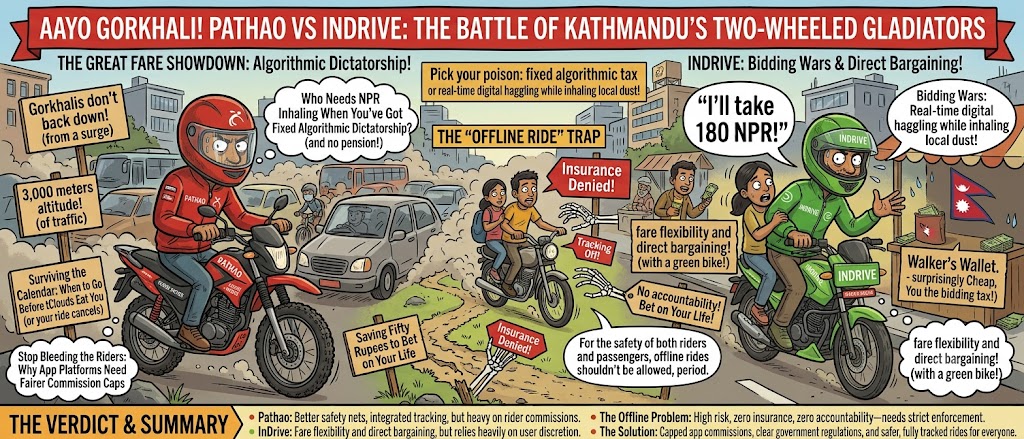
Let’s cut through the smog: commuting in the valley is a full-contact survival sport. In the red corner, we have Pathao, acting like an aristocratic landlord calculating fixed fares and taking hefty commission cuts out of a rider's sweat. In the green corner, we have InDrive—a real-time digital auction house where riders and passengers play chicken over a 30-rupee price difference while standing on a dusty curb. One gives you predictable rates, the other lets you embrace your inner Asan market bargainer. Either way, your lungs pay the ultimate price.
The "Offline Ride" Trap: Saving Fifty Rupees to Bet on Your Life
We’ve all heard the whisper at the roadside: "Offline jaane हो?" (Wanna go offline?). Sure, skipping the app to save a few rupees sounds tempting, until you realize you’ve traded insurance, GPS tracking, and digital accountability for pure blind faith. Going offline turns a simple 10-minute commute into a high-stakes lottery. If things go south, there’s no app support, no panic button, and no digital breadcrumbs—just you, a stranger, and your own life choices. For the safety of both riders and passengers, offline rides shouldn't be allowed, period.
Stop Bleeding the Riders: Why App Platforms Need Fairer Commission Caps
While passengers bitch about price surges, the real heroes—the riders weaving through toxic traffic and dodging potholes—are getting squeezed from both ends. Platforms charging steep platform commissions force riders into exhaustion just to cover fuel, maintenance, and basic daily living costs. When apps extract excessive cuts from every ride, it creates desperation, pushing drivers toward risky offline rides just to survive. Lowering and regulating platform commission fees isn't just fair; it’s an absolute economic necessity for the gig economy.
The Hope for Smart Regulation: Order in the Kathmandu Chaos
There is a light at the end of the dusty tunnel. Ride-hailing shouldn't be a wild-west frontier where tech companies play games, government draft regulations stall in bureaucracy, and drivers bear the entire burden. Proper government standards—enforcing fair commission caps, mandatory insurance coverage, strict safety protocols, and zero-tolerance policies for unregistered offline rides—can turn this mess into a world-class transit system. Kathmandu's commuters and hard-working riders deserve safety, dignity, and a smooth ride into the future.
THE VERDICT & SUMMARY
-
Pathao: Better safety nets, integrated tracking, but heavy on rider commissions.
-
InDrive: Fare flexibility and direct bargaining, but relies heavily on user discretion.
-
The Offline Problem: High risk, zero insurance, zero accountability—needs strict enforcement.
-
The Solution: Capped app commissions, clear government regulations, and safer, fully tracked rides for everyone.