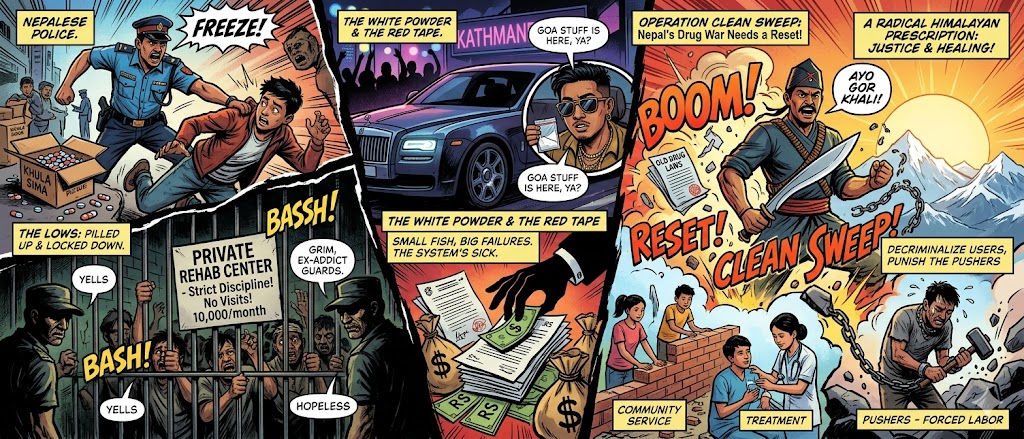
Every other week, it’s the same old drama. Our brave police wallahs are out there playing a high-stakes version of whack-a-mole, intercepting cocaine worth Rs 7.5 crore or chasing pill-smuggling speedsters across the border with more lead in the air than a heavy metal concert. It’s almost impressive—if it weren’t so depressing.
We are effectively fighting a digital-age drug epidemic with analog-era tactics. Nixon’s 1970s "War on Drugs" was a disaster that killed our glorious hippie tourism and turned our own sacred, time-honored green herbs into contraband. We adopted a model that didn't fit, and frankly, the suit is starting to look a bit frayed at the edges.
The Rehab Horror Show
If the drug trade is the poison, our "rehab" system is the bad medicine that’s arguably killing the patient. Currently, we’ve outsourced recovery to private centers—often run by ex-addicts who have traded their own trauma for a whip. Forget therapy; many of these places are essentially gulags with a PR department, featuring forced labor, starvation diets, and a total ban on family visits. Charging Rs 10,000 a month to mentally torture someone is a business model that would make a vulture weep. These aren't sanctuaries of healing; they are high-stress holding pens that push kids deeper into the abyss. It’s time to shutter these private dungeons and bring recovery back under state supervision, where the focus is on humanity, not hostility.
Small Fish, Big Failures
Our current legislative strategy is akin to using a sledgehammer to kill a mosquito—and missing every time. We delight in locking up the neighborhood kid for half a decade over a pocketful of pills, while the true kingpins—the ones importing the white powder for our bored, wealthy "Nepo-Kid" club-goers—are likely sipping tea with the very people supposed to be arresting them. The network stays intact; the supply chain is as smooth as a flight to Dubai. We aren't dismantling mafias; we are just rotating the cast of characters in our overcrowded jails.
A Radical Himalayan Prescription
So, how do we fix this without turning into a dystopian nightmare? First, we stop treating drug users as hardened criminals who need a cage. Look at the Europeans—they’ve realized that personal possession is a health issue, not a prison sentence. Let’s adopt mandatory community service and proper medical treatment instead of rotting souls in a cell. As for the dealers? Well, maybe we shouldn't send them to Everest in flip-flops, but we should absolutely strip them of their teen pustey assets and put them to work in Harka Sampang-style infrastructure projects until they learn the true value of a hard day's labor.
The Hope for a Sober Tomorrow
The system is broken, rigged, and arguably sniffing its own supply. But there is hope. We don't need more "War on Drugs" rhetoric; we need a "War on Stupidity." By decriminalizing users, providing actual medical support, and focusing our legal wrath on the high-level financiers of this rot, we can stop the cycle. We are a resilient people—we've survived quakes, political chaos, and the occasional bad momo. We can survive this, too, provided we have the guts to evolve. Let’s swap the handcuffs for healing and the apathy for action. The future of our youth is worth more than a few busted headlines.
Jai Nepal!
हरेक अर्को हप्ता, यो उही पुरानो नाटक हो। हाम्रा बहादुर पुलिस वालाहरू त्यहाँ ह्वैक-ए-मोलको उच्च-स्टेक संस्करण खेलिरहेका छन्, 7.5 करोड भारुको कोकिन रोक्छन् वा हेभी मेटल कन्सर्टको तुलनामा हावामा बढी सीसा लिएर सीमा पार गोली तस्करी गर्ने स्पीडस्टरहरूलाई पछ्याइरहेका छन्। यो लगभग प्रभावशाली छ - यदि यो यति निराशाजनक थिएन भने।
हामी एनालग-युग रणनीतिको साथ डिजिटल युगको लागुऔषध महामारीसँग प्रभावकारी रूपमा लडिरहेका छौं। निक्सनको 1970 को दशकको "ड्रग्सको युद्ध" एक आपदा थियो जसले हाम्रो गौरवशाली हिप्पी पर्यटनलाई मार्यो र हाम्रो आफ्नै पवित्र, समय-सम्मानित हरियो जडीबुटीलाई निषेधमा परिणत गर् यो। हामीले एक मोडेल अपनायौं जुन फिट भएन, र स्पष्ट रूपमा, सूट किनारमा अलि फ्याँकिएको देखिन थालेको छ।
द रिह्याब हरर शो
यदि लागूपदार्थको व्यापार विष हो भने, हाम्रो "पुनर्वास" प्रणाली खराब औषधि हो जसले बिरामीलाई मारिरहेको छ। हाल, हामीले रिकभरीलाई निजी केन्द्रहरूमा आउटसोर्स गरेका छौं - प्राय: पूर्व-दुर्व्यसनीहरूद्वारा सञ्चालित जसले कोर्राको लागि आफ्नै आघातको व्यापार गरेका छन्। थेरापी बिर्सनुहोस्; यी स्थानहरू मध्ये धेरै अनिवार्य रूपमा पीआर विभागको साथ गुलाग छन्, जबरजस्ती श्रम, भोकमरी आहार, र पारिवारिक भ्रमणहरूमा पूर्ण प्रतिबन्ध छ। कसैलाई मानसिक यातना दिन मासिक १० हजार रुपैयाँ लिनु गिद्धलाई रुवाउन बाध्य पार्ने बिजनेस मोडेल हो । यी उपचारको अभयारण्य होइनन्; तिनीहरू उच्च-तनाव होल्डिङ कलमहरू हुन् जसले बच्चाहरूलाई गहिराइमा धकेल्छ। यो यी निजी कालकोठरीहरू बन्द गर्ने र रिकभरी राज्यको निगरानीमा फिर्ता ल्याउने समय हो, जहाँ ध्यान मानवतामा केन्द्रित छ, शत्रुतामा होइन।
साना माछा, ठूला असफलताहरू
हाम्रो वर्तमान विधायी रणनीति लामखुट्टे मार्न स्लेजह्यामर प्रयोग गर्नु जस्तै हो - र हरेक पटक हराउँछ। हामी छिमेकको बच्चालाई आधा दशकको लागि एक पकेट चक्कीमा बन्द गर्न पाउँदा खुसी छौं, जबकि साँचो किंगपिनहरू - जसले हाम्रो बोर भएका, धनी "नेपो-किड" क्लब-जानेहरूको लागि सेतो पाउडर आयात गर्छन् - सम्भवतः उनीहरूलाई पक्राउ गर्ने मानिसहरूसँग चिया पिउँदैछन्। नेटवर्क अक्षुण्ण रहन्छ। आपूर्ति श्रृंखला दुबईको उडान जत्तिकै सहज छ। हामी माफियाहरू भत्काइरहेका छैनौं; हामी केवल हाम्रो भीडभाड जेलमा पात्रहरूको कास्टलाई घुमाइरहेका छौं।
एक कट्टरपन्थी हिमालयन प्रिस्क्रिप्शन
त्यसोभए, हामी यसलाई कसरी ठीक गर्छौं एक डायस्टोपियन दुःस्वप्नमा परिणत नगरी? पहिलो, हामी लागूऔषध प्रयोगकर्ताहरूलाई कठोर अपराधीको रूपमा व्यवहार गर्न रोक्छौं जसलाई पिँजडा चाहिन्छ। युरोपेलीहरूलाई हेर्नुहोस् - उनीहरूले महसुस गरेका छन् कि व्यक्तिगत स्वामित्व एक स्वास्थ्य समस्या हो, जेल सजाय होइन। एउटा कोठरीमा आत्माहरू कुहनुको सट्टा अनिवार्य सामुदायिक सेवा र उचित चिकित्सा उपचार अपनाऔं। डिलरहरूको लागि? ठीक छ, हुनसक्छ हामीले उनीहरूलाई फ्लिप-फ्लपमा सगरमाथामा पठाउनु हुँदैन, तर हामीले उनीहरूलाई उनीहरूको किशोर पुस्टे सम्पत्तिबाट पूर्ण रूपमा हटाउनु पर्छ र उनीहरूलाई हर्का साम्पाङ-शैलीको पूर्वाधार परियोजनाहरूमा काम गर्न लगाउनु पर्छ जबसम्म उनीहरूले कडा दिनको श्रमको सही मूल्य सिक्दैनन्।
शान्त भोलिको आशा
प्रणाली बिग्रिएको छ, धाँधली भएको छ, र तर्कपूर्ण रूपमा आफ्नै आपूर्तिको गन्ध लिइरहेको छ। तर त्यहाँ आशा छ। हामीलाई थप "ड्रग्स विरुद्ध युद्ध" बयानबाजीको आवश्यकता छैन; हामीलाई "मूर्खताको विरुद्ध युद्ध" चाहिन्छ। प्रयोगकर्ताहरूलाई डिक्रिमिनलाइज गरेर, वास्तविक चिकित्सा सहायता प्रदान गरेर, र यस सड्ने उच्च-स्तरीय फाइनान्सरहरूमा हाम्रो कानुनी क्रोधलाई केन्द्रित गरेर, हामी चक्र रोक्न सक्छौं। हामी एक लचिलो मानिसहरू हौं - हामी भूकम्प, राजनीतिक अराजकता, र कहिलेकाँही खराब मोमोबाट बाँचेका छौं। हामी पनि यसबाट बच्न सक्छौं, यदि हामीसँग विकसित हुने हिम्मत छ भने। उपचारको लागि हथकडी र कार्यको लागि उदासीनता साटासाट गरौं। हाम्रा युवाहरूको भविष्य केही बस्ट हेडलाइनहरू भन्दा बढी मूल्यवान छ।
जय नेपाल !