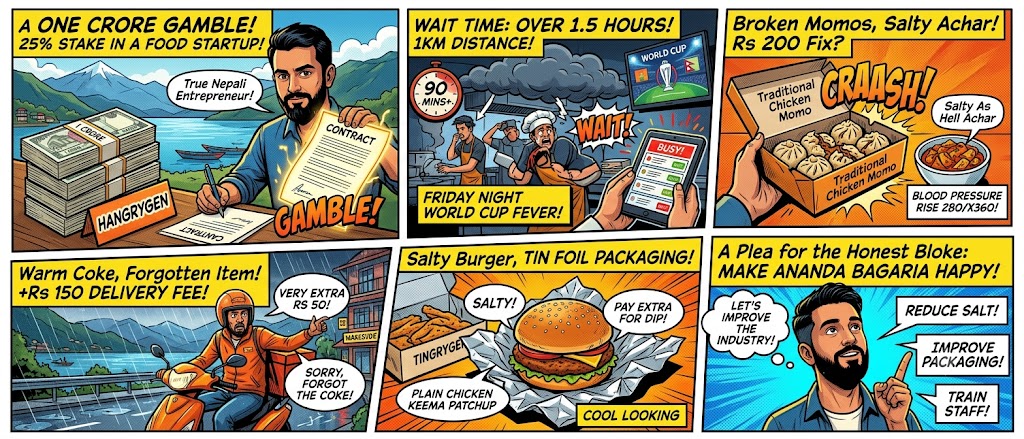
In the high-stakes world of Nepali entrepreneurship, few names carry the weight of Anand Bagaria. Known for his "Nimbus" fame and his unwavering commitment to the feed industry and grains, Bagaria is widely regarded as one of the few truly brave souls willing to bet big on local ventures. So, when news broke that he had sunk a cool 1 crore into a 25% stake in HangryGen, a cloud kitchen venture in the bustling Lakeside of Pokhara, the culinary world took notice. A year in, I decided it was time to see if this investment was a stroke of genius or a recipe for disaster. Armed with an appetite and a healthy dose of skepticism, I placed my order.
The Long Wait for "Fast" Food
It was a Friday night—prime time for food delivery, admittedly amplified by the World Cup fever sweeping through North America and reaching our own living rooms. Still, when you are a mere one kilometer away from a cloud kitchen, a wait time exceeding ninety minutes feels less like a delivery and more like a tactical supply mission. One might argue the "World Cup fever" causes delays, but if a cloud kitchen is built for scale, one would hope the infrastructure could handle the heat.
The Momo Catastrophe: Salt, Soil, and Sadness
When the food finally arrived, delivered by a guy who had to make a second trip because he forgot the Coke—which arrived as warm as a summer afternoon in the Terai—I had already paid a delivery fee that felt, at this point, like a voluntary donation. The traditional chicken momos, priced at Rs 200, were cheap for a late-night fix, but they arrived in a state of structural collapse. They were broken, mangled, and sad. But the real crime was the achar. It wasn’t a chutney; it was a concentrated saline solution masquerading as a curry paste. I am fairly certain one bite would have sent my blood pressure soaring to a theoretical 280/360. It was, quite literally, a salty disaster.
The Burger Patch-Up
The burger was... present. The bun was fine, but the patty felt like a hurried patch-up job of plain chicken keema. It shared the same aggressive affinity for salt as the momo dip, suggesting that perhaps the kitchen staff is confused about the difference between flavor and a mineral mine. And don't get me started on the extra charges for basic dips. When you are already paying for the meal, nickeling and diming for a bit of mayonnaise feels like a betrayal. The packaging, while aesthetically "cool" on the outside, was let down by the standard tin foil on the inside—hardly the premium experience one might expect from a venture with such significant backing.
A Plea for the Entrepreneur
I truly want HangryGen to succeed, if only because we need more investors like Bagaria, an honest entrepreneur who actually puts his money where his mouth is. To make Bagaria proud—and to ensure Pokhara’s food scene doesn’t just become a meme—the path forward is clear. First, fix the packaging; tin foil is for baked potatoes, not for delivering a culinary vision. Second, lower the salt. You are cooking for customers, not curing meat for a long winter. Third, train the staff. A cloud kitchen is only as good as its logistics.
There is hope here. With the right adjustments, HangryGen could be the next big thing in the valley. But for now, it’s a crore-rupee gamble that still needs to find its footing. Anand Bagaria is a man of vision, and he deserves a product that matches his ambition. Let’s hope that in the next year, the only thing "salty" about HangryGen is the humor in reviews like this one. If they can dial back the sodium and dial up the standards, they might just turn this into a legacy worth investing in.