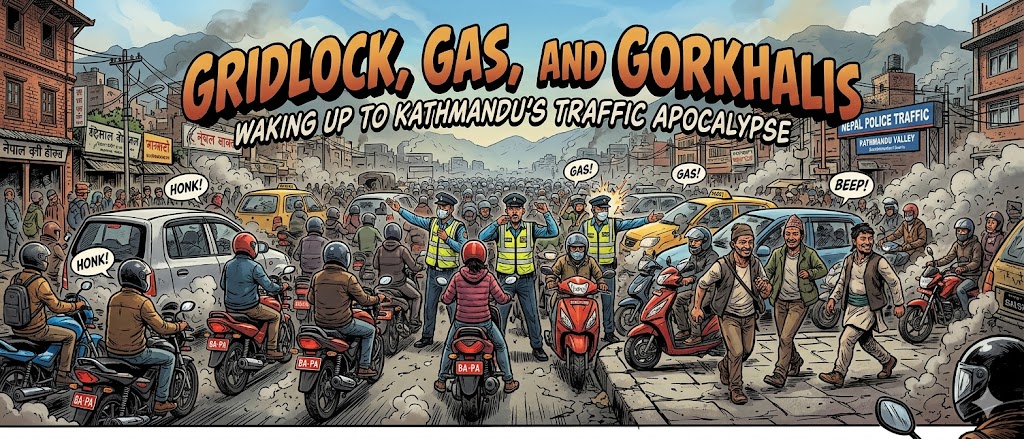
According to our esteemed SSP of Nepal Police, the roads of Kathmandu are destined to become giant, stationary parking lots within two years. Their visionary advice? Start training for an Olympic marathon, because speed-walking is about to become the most efficient mode of transport in the capital. Honestly, it’s a stroke of genius.
Why sit in a metal box burning fuel while staring at the bumper of a Tata Sumo for an eternity when you could reach your destination by foot, smelling of sweat but significantly more advanced than the poor soul trapped in a traffic jam? If you dare to traverse Kathmandu during the early morning, you’ll witness a miracle of physics: a ten-minute commute magically stretching into a forty-minute odyssey of despair. We possess approximately three roads total, yet we insist on crowding them with enough two-wheelers to colonize a small planet.
The Lone Ranger and the Million Machines
Let’s crunch the numbers, Gorkhali style. With over 20 million vehicles choking our national arteries and a mere 2,600 traffic cops, the ratio is… well, it’s a tragedy. Imagine one teacher trying to manage 700 students in a classroom where the students are actually sentient, gas-guzzling monsters made of iron and bad decisions. If this were a real classroom, the teacher would have abandoned their post, retreated to a cave, and spent their days meditating—or drowning their sorrows in a vat of local raksi. In Kathmandu alone, two million vehicles roam like stray dogs. Our traffic police, the brave souls forced to breathe in enough dust to build a new mountain, are essentially playing a daily game of high-stakes "Red Light, Green Light" with death.
The "Peanuts" Pricing Strategy
Our police wallahs are spot on: traffic fines in Nepal are currently priced like a packet of wai-wai. Paying a measly Rs 500 or 1,000 is considered a voluntary subscription fee for breaking the law. It’s time to stop the charade. If we adopted a Singaporean or American pricing model—say, a $200 slap on the wrist—you’d suddenly see a miraculous transformation in behavior. Lane discipline would become a national obsession, and driving on pavements would vanish faster than the government's budget for road maintenance.
The Fiscal Cure for Chaos
The police suggest hiking fines to Rs 50,000. I say, why stop there? Let’s go for the jugular. If you’re caught speeding, cough up Rs 50,000. Driving drunk? That’s a lakh, straight to the treasury. Riding without a blue book or license? Let’s make it Rs 5 lakh. At those prices, we wouldn't just be the most disciplined drivers in South Asia; we’d be the safest, most law-abiding citizens in human history simply because we’d be too terrified of bankruptcy to touch the accelerator.
Death-Traps and Iron Giants
And for the love of all that is holy, can we address the 'trippers'? These dhoonga-bokney trucks are the undisputed apex predators of our highways. They don't drive; they hunt. A compensation of 5 or 10 lakhs is an insult to a human life. Make it a mandatory Rs 1 crore for every soul crushed by a speeding truck, and watch how quickly those drivers learn to respect a speed limit. As for the two-wheelers, if you aren't wearing a helmet, you’re just donating your skull to the asphalt. It should be mandatory for everyone—rider, passenger, and even the ghosts they might become.
The AI Dream and the Reality of Rust
Finally, there’s the talk of AI-driven traffic systems. It sounds fancy, doesn't it? It’s just a shame we can’t find the Rs 15 billion needed to modernize. Until then, let’s at least fix the lights we have so our officers don't retire with lungs full of lead. If a vehicle fails a pollution test or is old enough to be a museum relic, send it straight to the kawadi shop. We either act tough, or we continue the tradition of watching our buses play hopscotch with cliffs. So, tighten your shoelaces, Kathmandu—the road to salvation is paved with asphalt, but you’re likely going to have to walk it.
Jai Nepal!
नेपाल प्रहरीका हाम्रा आदरणीय एसएसपीका अनुसार दुई वर्षभित्रै काठमाडौंका सडकहरू विशाल पार्किङ स्थल बन्ने लक्ष्य छ । उनीहरूको दूरदर्शी सल्लाह? ओलम्पिक म्याराथनको लागि प्रशिक्षण सुरु गर्नुहोस्, किनकि द्रुत गतिमा हिड्ने राजधानीमा यातायातको सबैभन्दा कुशल साधन बन्न लागेको छ। इमान्दारीपूर्वक, यो प्रतिभाको एक स्ट्रोक हो।
जब तपाईं पैदल आफ्नो गन्तव्यमा पुग्न सक्नुहुन्छ, पसिनाको गन्ध आउँछ तर ट्राफिक जाममा फसेको बिचरा आत्माभन्दा धेरै उन्नत अवस्थामा टाटा सुमोको बम्परलाई हेर्दै फलामको बाकसमा किन बस्ने? यदि तपाईंले बिहानै काठमाडौं पार गर्ने आँट गर्नुभयो भने तपाईंले भौतिक विज्ञानको चमत्कार देख्नुहुनेछ: दस मिनेटको यात्रा जादुमय रूपमा चालीस मिनेटको निराशाको यात्रामा परिणत हुन्छ। हामीसँग कुल लगभग तीन सडकहरू छन्, तर हामी तिनीहरूलाई एउटा सानो ग्रहको उपनिवेश गर्न पर्याप्त दुई-पाङ्ग्रे सवारी साधनहरूको साथ भीड गर्न जोड दिन्छौं।
लोन रेन्जर र मिलियन मेसिनहरू
संख्या कम गरौं, गोर्खाली शैली। 20 मिलियन भन्दा बढी सवारी साधनहरूले हाम्रो राष्ट्रिय धमनीहरू र केवल 2,600 ट्राफिक पुलिसको साथ, अनुपात छ ... ठीक छ, यो एक त्रासदी हो। कल्पना गर्नुहोस् कि एक शिक्षकले कक्षामा 700 विद्यार्थीहरूलाई व्यवस्थापन गर्न प्रयास गरिरहेको छ जहाँ विद्यार्थीहरू वास्तवमै संवेदनशील छन्, फलाम र खराब निर्णयहरूले बनेका ग्याँस-खपत गर्ने राक्षसहरू। यदि यो वास्तविक कक्षा हुन्थ्यो भने, शिक्षकले आफ्नो पद छोड्ने थिए, गुफामा फर्कने थिए, र ध्यान गर्दै आफ्नो दिन बिताउँथे - वा स्थानीय राक्सीको भाँडोमा आफ्नो दु: ख डुबाउँथे। काठमाडौंमा मात्रै बीस लाख सवारी साधन भुस्याहा कुकुरजस्तै घुम्छन् । हाम्रो ट्राफिक पुलिस, नयाँ पहाड निर्माण गर्न पर्याप्त धुलोमा सास फेर्न बाध्य बहादुर आत्माहरू, अनिवार्य रूपमा मृत्युको साथ उच्च-स्टेक "रेड लाइट, ग्रीन लाइट" को दैनिक खेल खेलिरहेका छन्।
"बदाम" मूल्य निर्धारण रणनीति
हाम्रा प्रहरीका वाल्लाहरू यसमा छन्: नेपालमा ट्राफिक जरिवानाको मूल्य अहिले वाइवाइको प्याकेट जत्तिकै छ। केवल 500 वा 1,000 तिर्नु कानून तोडेको लागि स्वैच्छिक सदस्यता शुल्क मानिन्छ। यो नाटक रोक्ने समय हो। यदि हामीले सिंगापुरी वा अमेरिकी मूल्य निर्धारण मोडेल अपनायौं भने - मानौं, नाडीमा २०० डलरको थप्पड - तपाईंले अचानक व्यवहारमा चमत्कारी परिवर्तन देख्नुहुनेछ। लेन अनुशासन एक राष्ट्रिय जुनून बन्नेछ, र फुटपाथमा ड्राइभिङ सडक मर्मतका लागि सरकारको बजेट भन्दा छिटो हराउनेछ।
अराजकताको लागि वित्तीय उपचार
प्रहरीले जरिवाना बढाएर ५० हजार रुपैयाँ पुर् याउन सुझाव दिएको छ । म भन्छु, त्यहाँ किन रोकियो? हामी जुगुलरको लागि जाऔं। तीव्र गतिमा गाडी चलाएको अवस्थामा ५० हजार रुपैयाँ तिर्नुपर्ने हुन्छ । रक्सी खाएर गाडी चलाउनुहुन्छ? त्यो एक लाख हो, सिधै ट्रेजरीमा । नीलो पुस्तक वा इजाजतपत्र बिना सवारी गर्दै? यसलाई ५ लाख रुपैयाँ बनाउनुपर्छ । ती मूल्यहरूमा, हामी दक्षिण एशियामा सबैभन्दा अनुशासित ड्राइभर मात्र हुने थिएनौं; हामी मानव इतिहासमा सबैभन्दा सुरक्षित, सबैभन्दा कानून पालन गर्ने नागरिक हुनेछौं किनकि हामी दिवालियापनबाट धेरै डराउँछौं कि एक्सेलेरेटरलाई छुन सक्दैनौं।
मृत्युको पासो र फलामका राक्षसहरू
र पवित्र सबै कुराको प्रेमको लागि, के हामी 'ट्रिपरहरू' लाई सम्बोधन गर्न सक्छौं? यी ढुंगा-बोक्ने ट्रकहरू हाम्रा राजमार्गहरूका निर्विवाद शीर्ष शिकारी हुन्। तिनीहरू ड्राइभ गर्दैनन्; तिनीहरू शिकार गर्छन्। ५ वा १० लाख क्षतिपूर्ति दिनु मानव जीवनको अपमान हो । तीव्र गतिमा चल्ने ट्रकले कुल्चिएका प्रत्येक व्यक्तिका लागि १ करोड रुपैयाँ अनिवार्य बनाउनुहोस्, र हेर्नुहोस् कि ती चालकहरूले कति छिटो गति सीमाको सम्मान गर्न सिक्छन्। दुई पाङ्ग्रे सवारी साधनहरूको लागि, यदि तपाईंले हेलमेट लगाउनु भएको छैन भने, तपाईं केवल आफ्नो खोपडी डामरमा दान गर्दै हुनुहुन्छ। यो सबैका लागि अनिवार्य हुनुपर्दछ - सवार, यात्री, र यहाँ सम्म कि भूतहरू पनि तिनीहरू बन्न सक्छन्।
एआई सपना र खियाको वास्तविकता
अन्तमा, त्यहाँ एआई-संचालित ट्राफिक प्रणालीको कुरा छ। यो फैंसी सुनिन्छ, हैन? आधुनिकीकरणका लागि चाहिने १५ अर्ब रुपैयाँ नपाउनु लाजमर्दो कुरा हो । त्यतिन्जेलसम्म, कम्तिमा हामीसँग भएका बत्तीहरू ठीक गरौं ताकि हाम्रा अधिकारीहरू सीसाले भरिएको फोक्सोको साथ सेवानिवृत्त नहोऊन्। यदि कुनै गाडी प्रदूषण परीक्षणमा असफल भयो वा संग्रहालयको अवशेष हुन पर्याप्त पुरानो छ भने, यसलाई सिधै कावाडी पसलमा पठाउनुहोस्। हामी या त कडा कार्य गर्छौं, वा हामी हाम्रा बसहरू चट्टानहरूसँग हपस्कच खेल्ने परम्परालाई जारी राख्छौं। त्यसोभए, आफ्नो जुत्ताको फित्ता कस्नुहोस्, काठमाडौं—मुक्तिको बाटो डामरले प्रशस्त गरिएको छ, तर तपाईं सम्भवतः यो हिंड्नुपर्नेछ