Good Morning Nepal!
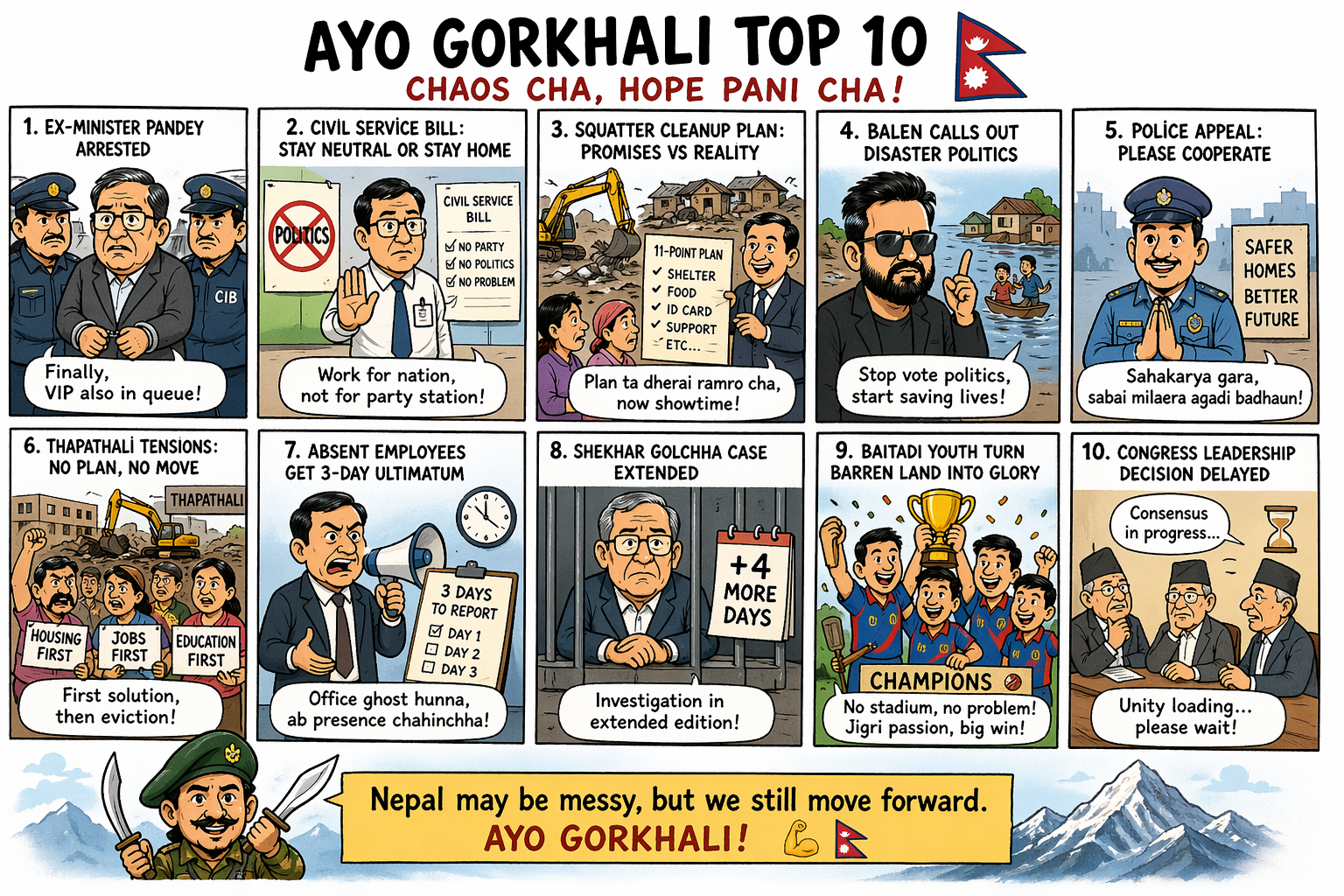
1. Ex-Minister Pandey Arrested: “VIP Handcuffs Finally Arrive”
Former minister Bikram Pandey has been arrested by the Central Investigation Bureau, proving that even powerful names are not completely immune. The news has shaken political circles, where accountability usually arrives late or not at all. Citizens are reacting with cautious excitement, as past cases have taught them not to celebrate too early. Selective optimism says this could be the beginning of consequences actually meaning something.
2. Civil Service Bill Says: “Stay Neutral or Stay Home”
The government has proposed a strict civil service bill that bans political involvement for government employees. Even indirect links to political parties could now lead to dismissal and disqualification from future service. It feels like the system is finally trying to separate governance from party influence. Selective optimism says this might create a bureaucracy that works without hidden agendas.
3. Squatter Cleanup Plan: Big Promises, Bigger Questions
The government has announced a detailed plan to remove informal settlements while promising temporary shelter and basic support. On paper, it looks structured and humane, with multiple steps to ensure relocation. On the ground, people remain unsure whether support will come before or after displacement. Selective optimism says at least planning has started, even if trust is still missing.
4. Balen Calls Out Disaster Politics: “Stop Waiting for Floods”
Prime Minister Balen Shah has reminded the public how yearly floods displace thousands living along riverbanks. He questioned whether leaders are genuinely solving the issue or just using it for political gain. The message resonated because the problem repeats every year with little long-term action. Selective optimism says this public pressure might finally push leaders to act before the next disaster.
5. Police Ask for Cooperation: “Trust Us This Time”
Nepal Police has urged the public to cooperate with the government’s plan to manage landless settlements. The initiative is presented as a step toward safer housing and improved living conditions. However, many citizens remain skeptical due to past experiences with similar promises. Selective optimism says cooperation could work if transparency follows.
6. Thapathali Tensions Rise: Residents Demand Real Solutions
Communities in Thapathali have expressed fear and resistance against eviction without proper alternatives. The situation has become tense as authorities prepare for possible clearance operations. Residents are demanding housing, jobs, and education before any displacement takes place. Selective optimism says this resistance might force authorities to deliver more practical and humane solutions.
7. Missing Employees Given Deadline: “Show Up or Face Action”
The government has issued a three-day ultimatum to employees who have not reported to their assigned posts. After years of weak enforcement, authorities are now taking a stricter stance on attendance. The move highlights long-standing inefficiencies within the administrative system. Selective optimism says this could be a small step toward making public offices actually functional.
8. Baitadi Youth Turn Barren Land into Cricket Victory
Teenagers practicing cricket on unused land in Baitadi have won a local tournament. Their journey from informal practice sessions to champions shows determination despite limited resources. The story stands out as a rare positive highlight amid heavier national issues. Selective optimism says talent can succeed even without perfect infrastructure.
9. Nepali Congress Leadership Decision Delayed: “Consensus Still in Progress”
Nepali Congress has postponed its leadership election to attempt a consensus-based decision. The delay reflects ongoing internal disagreements within the party. Supporters are left waiting as discussions continue without a clear timeline. Selective optimism says a unified decision, if achieved, could strengthen the party moving forward.